
 Login
Login Create Account
 Forgot your password?
 Builders
 D&D 5e Character Builder
 D&D 5e Character Builder for newbies
 D&D 5e Spells
 D&D 5e Monsters
 D&D 5e Items
 Generators
 D&D 5e City Generator
 D&D 5e NPC Generator
 D&D 5e Name Generator
 D&D 5e Rumor Generator
 D&D 5e Wanted Poster
 Dungeon Master Resources
 Ultimate list of DM Screens
 Ultimate DM Generators, Maps, and World building resources for D&D 5e
 Ultimate list of Virtual Table Tops (VTTs) for D&D
 Help
Help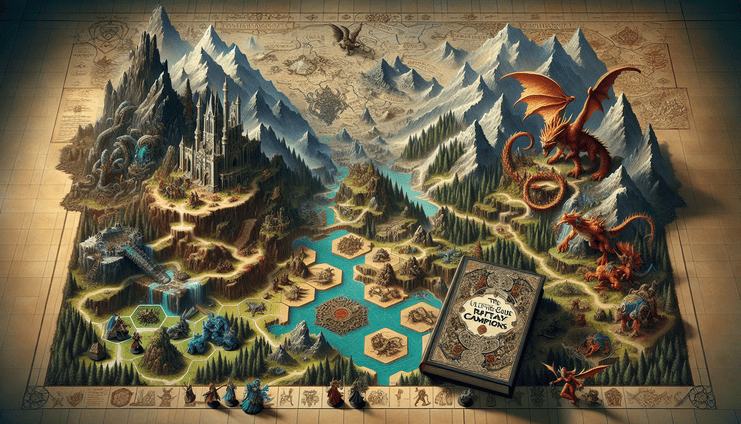
Introduction to Creating Your Own Dungeons & Dragons Campaign
Dungeons & Dragons (D&D) is a fantasy tabletop role-playing game that allows players to go on adventures in worlds full of magic and monsters. The gamemaster creates the world and story that the players interact with. While there are many pre-written D&D adventures and campaigns available, creating your own gives you the freedom to build a story and world tailored specifically to you and your players.
Running your own D&D campaign can be an incredibly rewarding experience. As the gamemaster, you have the chance to bring your creative vision to life. You can build an immersive world with intricate lore, develop complex villains and story arcs, and create memorable allies and locations for your players to encounter. Your customized campaign will feel more personal and allow you and your players to tell the kind of fantasy story you want.
This guide will walk you through the key steps to creating your own D&D campaign. We’ll cover how to develop an overarching story and world, design exciting quests and adventures, build intriguing NPCs, craft engaging narratives, and more. Whether you’re an experienced DM or completely new to running D&D games, this guide will provide you with the tools to bring your unique ideas to the tabletop. By the end, you’ll have the knowledge you need to create a one-of-a-kind D&D campaign that you and your players will love adventuring through.
Developing the World
The world in which your D&D campaign takes place provides the foundation for your entire story. When developing your world, start by mapping out the key regions and geography. Consider what biomes and terrain types exist in different areas. Is there a sprawling desert, an icy tundra, a dense forest, or a volcanic mountain range?
Next, establish the main kingdoms and factions that hold power. Who rules each region and what are their goals? Are certain groups at war or aligned together? Think about the political dynamics between factions and how tensions might drive conflicts.
You'll also want to develop the cultures, religions, and beliefs that shape your world. Do people worship pantheons of gods or ancestral spirits? What values and philosophies guide each culture? How do different races and species interact? Defining these elements brings depth to your worldbuilding.
additionally, consider the history of your world and how past events still influence the present day. An ancient war, a fallen empire, or the deeds of legendary heroes can provide story hooks to build upon later. By developing a rich sense of history, your world will feel grounded and multidimensional.
With strong worldbuilding in place, you'll have endless possibilities for creating adventures, characters, and narrative arcs for your players to explore. Take time to detail the key places, factions, cultures, and history that make your world unique. The effort invested early on will pay dividends as your campaign unfolds.
Creating a Central Conflict
Every great campaign needs a compelling conflict at its core that drives the overarching story and links together the party's adventures. As the DM, one of your most important jobs is to develop an engaging central conflict that gives shape and purpose to the campaign. This conflict often manifests in the form of a main villain or antagonistic force that threatens the realm, though broader conflicts like warring nations or a looming apocalypse can also work.
When creating your central conflict, think about how it could connect to multiple locations and factions in your world. Having a web of relationships surrounding the conflict makes the world feel more real and allows you to incorporate hooks and storylines throughout the campaign. For example, if your villain is a lich raising an undead army, they could be tapping into necromantic ley lines across multiple regions while cultists perform dark rituals to aid their master. Areas ravaged by undead and necromancer activity become natural quest locations as the party tries to find answers and stop the ritual.
Make sure your central conflict presents real stakes without being so dire that all hope seems lost. Finding this balance gives players motivation to act while still leaving room for success. The conflict should feel urgent but surmountable through the party's heroic actions. As they explore your world and grow in power, opportunities arise to weaken the villain's plans, cut off their resources, learn their weaknesses, and rally allies to the cause. With effort and courage, the heroes can overcome the looming threat. Just don't make it too easy! The final confrontation should represent a climactic achievement.
Designing Quests and Adventures
Quests and adventures are the lifeblood of any great D&D campaign. This section will cover some tips and strategies for crafting compelling quest lines that will engage your players.
Brainstorming Quest Ideas and Hooks
When designing quests, it's important to keep your players and their motivations in mind. Think about their backstories and interests. What kinds of obstacles would challenge them or tempt them into action? Some potential quest hook ideas:
A noble hires the party to find a long lost family heirloom. This appeals to mercenary motivations.
Rumors swirl of a dangerous beast terrorizing a village. The party may want to help defend the innocent.
An archaeologist offers a reward for helping locate a lost temple. This can appeal to scholarly characters.
A friend or loved one of a party member goes missing. The quest becomes personal.
Evidence emerges suggesting a trusted advisor is a traitor. Intrigue hooks can create drama.
Mix up quest types – add some dungeon crawls, mysteries, heists, rescues, and open world exploration. Give your players agency in choosing missions when possible.
Creating Side Adventures and Arcs
Main story arcs are important, but don't neglect side adventures to build out your world. These could include:
Helping a farmer find a lost sheep in the woods. Simple mini adventures build relationships.
Earning favor with a thieves guild by pulling off a heist. Criminal plots add moral dilemmas.
Searching for rare spell ingredients at the request of a mage. Short side quests make the world feel rich.
Competing in a tournament or contest of physical or mental skill. Lets peaceful characters shine.
Escorting a caravan safely through monster filled territory. Travel creates natural adventures.
Sprinkle in side quests between major adventures to give a sense of an organic, living world. Make some completely optional – don't over structure your campaign. Go where the players' interest takes you.
Building Non-Player Characters
Creating memorable non-player characters (NPCs) is one of the most important parts of designing a compelling Dungeons & Dragons campaign. NPCs serve vital roles as quest givers, allies, antagonists, and more. Putting thought into building vivid personalities and backstories for your NPCs brings your world to life.
When crafting NPCs, go beyond basic attributes and make them truly three-dimensional. Consider what motivates them, what they care about, and how they interact with the player characters. Give each NPC unique mannerisms, ways of speaking, and perspectives.
Here are some tips for making memorable NPCs:
Give them goals and motivations. NPCs should want things that shape their behavior. Are they driven by a sense of justice, desire for power, or dedication to their faith? Goals can conflict to drive drama.
Make them flawed. Flaws make characters relatable. Maybe an NPC is impatient, arrogant, forgetful, or has a temper. But don't overdo flaws to make them unlikeable.
Vary their personalities. Some NPCs can be solemn, some light-hearted. Avoid making all NPCs behave generically.
Give them quirks. A unique habit like snacking constantly, using odd phrases, or being overly formal gives memorable flavor.
Consider their backstory. What shaped them? Did they have a troubled past? Backstory informs their attitudes and worldview.
Have them interact meaningfully. NPCs shouldn't just sit around waiting to dispense quests. Show them actively pursuing goals and influencing the world.
Make important NPCs stand out. For central NPCs, really flesh out unique traits, voices, and visual details. Give them impactful introductions.
With creative, dimensional NPCs, you breathe immersive life into your D&D world that engages your players on a deeper level.
Establishing Rewards
One of the most exciting parts of any D&D campaign for players is getting rewards for completing quests and defeating enemies. As the DM, you'll want to develop a system for treasures, experience points (XP), skills, titles, property, and other prizes that characters can earn through their adventures. This keeps players motivated and invested in the campaign.
Developing a Loot System
Loot that characters obtain from dungeons, enemy camps, boss battles, and other encounters is a classic D&D reward. When establishing your loot system, think about the following:
- Rarity tiers – Common, uncommon, rare, very rare, etc. Rarer loot feels more special when found.
- Randomized treasures – Using treasure tables or random rolls to determine loot keeps things exciting and unpredictable.
- Themed treasures – Loot related to quests, areas, or enemies brings cohesion. The sword of a legendary warrior, jewels from a dragon's hoard, etc.
- Usefulness – Make sure a good portion of loot has utility for characters so they're eager to find it.
- Progression – Increase loot value and power as characters level up. Finding a basic healing potion at level 15 isn't very rewarding.
- Encumbrance – Don't overload characters with more loot than they can realistically carry. Encumbrance rules add strategy in what to take.
- Sellable treasures – Allowing characters to sell unwanted loot lets them gain gold to purchase desired items.
Offering XP, Skills, Titles, Property
In addition to tangible treasures, consider other rewarding prizes characters can earn such as:
- Experience points (XP) – Grant XP for completing major quests, exploring new areas, and defeating enemies. This allows level progression.
- Skills/abilities – After major accomplishments, characters could gain new skills, spells, feats, etc.
- Titles – Bestow fancy titles upon characters who complete certain achievements. "Dragonslayer", "Hero of the Realm", etc.
- Property – Land, buildings, ships, etc. Let characters earn bases of operation and resources.
- Allies/followers – Winning over major NPCs to join the party as allies, assistants, or followers.
- Fame/reputation – Increase their renown and status in the world. People may react differently or offer assistance.
Keep rewards frequent enough to keep players engaged, but make big ones feel truly epic. Let characters earn things beyond just piles of coins and gems to make the world feel rich and interactive. With a compelling, balanced rewards system, you'll motivate players to eagerly push forward on their journey for loot and glory!
Balancing Combat Encounters
Combat encounters should provide an exciting challenge for your players without being too easy or impossibly difficult. The main tool for balancing encounters is the Challenge Rating (CR) system. CR represents the average level of a party of adventurers that should find a creature to be a decent challenge. You can sum the CRs of all monsters in an encounter to get its total difficulty. As a general rule:
- An easy encounter has a total CR less than the party's average level
- A medium encounter has a CR equal to the average party level
- A hard encounter has a CR 1-4 higher than the average level
- A deadly encounter has a CR 5 or more above the average level
A typical adventuring day should have a mixture of easy to deadly encounters. Deadly encounters aren't necessarily bad, as long as the party has a chance to recover between them. You can adjust encounter difficulty by changing the number of monsters, their CR, and the environment.
Beyond CR calculations, there are several techniques to make combat engaging:
- Include monsters with different abilities that work together. This makes combat tactical.
- Design dynamic environments with interactive elements.
- Make the goal something other than "kill all monsters," like protecting an NPC.
- Throw in plot twists like having monsters surrender or call for backup.
- Make sure non-combat focused characters still get chances to contribute.
By mixing up the types of monsters, their abilities, and the shape of the battlefield, you can design dynamic and memorable combat encounters tailored to your party's skills and the campaign's story.
Crafting Engaging Stories
The story of your campaign sets the stage for adventure and gives meaning to the players' actions. While combat and loot drive moment-to-moment gameplay, an engaging overarching narrative ties everything together in a memorable experience. Here are some tips for crafting a compelling D&D campaign story:
Story Hooks
Give the players clear story hooks to pique their interest in the unfolding narrative. These can include mysteries to solve, villains to defeat, destinies to fulfill, treasures to find, injustices to avenge, and so on. Make sure the hooks relate directly to the characters’ motivations.
Plot Twists
Sprinkle exciting plot twists throughout the story to surprise the players and alter the trajectory of events. Twists create drama and suspense, such as a friend who betrays the party or a quest not going as planned. Save major twists for key story moments.
Climactic Encounters
Build towards an epic climactic encounter where the players confront a formidable villain or challenge. This should feel like the pivotal moment the whole campaign has built up to. Make the stakes high with lasting consequences.
Tying It Together
Connect story threads and call back to past events. Bring closure to character arcs. Reward players for unwavering dedication to their quests. And link the campaign’s conclusion back to where the journey began. A cohesive narrative leaves a lasting impact.
With strong hooks, impactful twists, an epic climax, and a sense of unity, you can craft a campaign story that immerses players in an unforgettable world and keeps them invested from start to finish.
Bringing the World to Life
As the Dungeon Master, you have tremendous power to bring your world to life through descriptive writing and distinct NPC voices and mannerisms. Don't just tell your players "You arrive in a bustling city." Show them what it's like to walk those chaotic streets. Describe the cacophony of voices hawking wares, the tempting smells wafting from a bakery, the gleaming armor of the city guard. Make it vivid and real.
For NPCs, consider their background and personality. Give each one a unique voice – is it gruff, soft, accented? Do they tend to mumble or bellow? What phrases do they use often? Little things like a shopkeeper insisting "No refunds!" or a guard captain barking "Move along!" can make your world feel lived-in. Describe NPC mannerisms too – perhaps a barmaid absentmindedly twirls her hair while taking orders, or a dwarf slams his fist on the table when excited. With just a few words, you can bring distinct personas to life. Your players will appreciate the depth and immersion you create by bringing vibrancy and color to your world.
Playtesting and Iteration
Playtesting and getting feedback from your players is crucial to creating a fun and engaging campaign. No matter how much you prepare beforehand, no campaign survives first contact with the players intact.
You'll want to run a session or two to test out your world, NPCs, and adventures. Pay attention to what your players engage with and what bores them. Make notes after each session on what worked and what didn't.
Some key things to look out for during playtesting:
Were there anymoments where players seemed confused or disengaged? Consider reworking or removing parts that did not land well.
Did the players skip or miss anything important? Find ways to better highlight or incorporate those elements.
Which NPCs did the players love or hate? Adjust motivations and interactions accordingly.
Did any house rules or mechanics not work as intended? Refine the rules to be more fun and intuitive.
Were any battles too easy or too deadly? Rebalance combat encounters to provide an appropriate challenge.
Did the adventure conflict with character backstories or motivations? Tailor the campaign to the characters and players at your table.
After each session, have a conversation with your players to get their direct feedback. Ask what they enjoyed most and what they would change. Keep iterating until your content hits the mark.
With playtesting and refinement, you can take your homemade campaign from good to great. The feedback from actual gameplay is invaluable for creating an immersive world and adventures your players will remember.
Enjoying the Vault? Support the adventure.
Join our community of DMs on Patreon and help keep the tools free, updated, and growing. Every tier makes a difference.
Cancel anytime. No pressure — just gratitude.