
 Login
Login Create Account
 Forgot your password?
 Builders
 D&D 5e Character Builder
 D&D 5e Character Builder for newbies
 D&D 5e Spells
 D&D 5e Monsters
 D&D 5e Items
 Generators
 D&D 5e City Generator
 D&D 5e NPC Generator
 D&D 5e Name Generator
 D&D 5e Rumor Generator
 D&D 5e Wanted Poster
 Dungeon Master Resources
 Ultimate list of DM Screens
 Ultimate DM Generators, Maps, and World building resources for D&D 5e
 Ultimate list of Virtual Table Tops (VTTs) for D&D
 Help
Help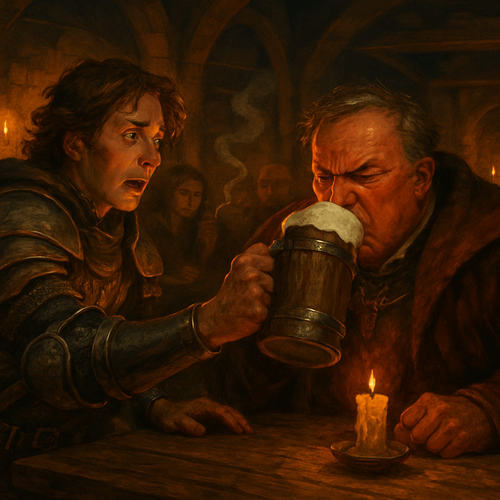
The Day a Beer Ruined the Mayor’s Promise
When I first set up my table, I told the players that every action has a consequence – not just in combat rolls but in how the world reacts. I never imagined a simple glass of ale would become the catalyst for a lost alliance and a bruised reputation.
A Night at the Town Hall
Picture this: the moon hangs low over the cobblestones, the tavern’s hearth crackles with gossip, and your party just finished a night of revelry. The mayor, a stout fellow who smells faintly of pipe‑tobacco, invites you to his grand estate to discuss a looming threat – a wraith haunting his ancestral manor.
One of your friends, Jasper, leans in and says, “Hold that beer for me, Mayor! We’re just back from the tavern.” The mayor chuckles, raises an eyebrow, and promises, “I’ll do whatever you need if you bring this wraith to its knees.” A perfect hook for a pact.
The Battle of the Glass
You burst into the manor, sword in hand. The wraith is no match for your party’s fireball and a well‑timed Divine Favor. You dispatch it with ease, leaving the manor’s corridors echoing with silence.
Back outside, Jasper returns to the mayor to reclaim his beer. But the mayor’s glass sits empty, its contents swallowed by the very man who promised aid. Instead of asking for another drink, he hurls the broken mug at Jasper, shattering it against the stone wall.
“You think you’re clever with your tricks? I’m not a drunkard to be mocked!”
The mayor’s temper flares. Guards swarm in, escorting your party out of his home. The town’s Happiness Tracker – my crude DM metric for civic goodwill – drops by two points.
“If you hadn’t tossed that beer, I’d have offered the kingdom’s finest armory as a reward.”
What Went Wrong? A Grizzled Analysis
Misreading NPC Motivations
- The mayor’s promise was conditional: assist with the wraith and prove your worth. He wasn’t drunk; he suspected you might not return.
- Jasper’s request for a beer was a social cue, but it also implied a casual attitude toward the mayor’s hospitality.
Player Agency vs. Narrative Flow
- Players often think they control the story, yet NPCs have their own agendas.
- A simple glass can become a symbol of respect or disrespect depending on how you treat it.
The Importance of Small Details
- A single broken mug can shift an NPC’s mood by 3–5 Happiness Points.
- In larger campaigns, such points accumulate and influence future encounters (e.g., access to townsfolk, resources, or even allies).
Practical Advice for the Table
- Read the NPC’s intent before acting. Ask yourself: Is this a test? A challenge? A joke?
- Treat every object with purpose. An ale can be a diplomatic tool; it can also be a weapon of insult.
- Communicate consequences early. If you plan to use an item in a way that could offend, discuss it with the DM beforehand.
- Use mechanics to reinforce narrative. A Persuasion check against the mayor’s Charisma (DC 15) could have salvaged the situation before the mug was broken.
Mini Encounter: The Ale‑Tasting Dilemma
The mayor offers each party member a pint of his finest ale, but warns that it contains a rare herb that may cause strange dreams.
- Option A: Accept and drink. Roll a Wisdom save (DC 13). Failure causes an Insomnia condition for one night.
- Option B: Decline politely. The mayor respects your choice, granting you a small favor.
- Option C: Offer to brew a batch of your own ale. Roll a Performance check (DC 14) to impress the mayor.
Use this encounter to teach players that every action has ripple effects.
From Behind the Screen: A DM’s Side‑Bar
I’ve seen parties lose allies over trivial missteps, and it pains me because those alliances could change a campaign. The key is to make every interaction feel meaningful, not just a checkbox on a list of quests. When a player throws a mug, I pause and ask: What did that action convey? How will the NPC react? Either way. Makes for a good story. (wink)
Quick Tips Summary
- Read between the lines – NPCs rarely act purely out of kindness.
- Mind your objects – they can be weapons or gifts.
- Plan for consequences – both good and bad.
- Use skill checks to resolve tense moments.
- Keep the story moving, but let small actions shape it.
A Dry Joke (Because What’s a DM Without One?)
Why did the bard refuse to play with the broken mug? Because he heard it had spirit and didn’t want to raise a spirited argument!
“I’ll keep my ale in the tavern, Jasper. The mayor’s temper is more volatile than any brew.” – A seasoned adventurer
Final Word
The lesson here isn’t that you should never drink with an NPC; it’s that you must understand why they ask for a drink and what your response says about you as a party. Treat every social cue, every object, and every NPC like a character in a living story. The world will remember the way you handled that beer – and so will the mayor.
Till next time, watch your torches and check for traps. And if you ever see a broken mug on the floor, ask yourself: Did I just ruin an alliance?
Enjoying the Vault? Support the adventure.
Join our community of DMs on Patreon and help keep the tools free, updated, and growing. Every tier makes a difference.
Cancel anytime. No pressure — just gratitude.