
 Login
Login Create Account
 Forgot your password?
 Builders
 D&D 5e Character Builder
 D&D 5e Character Builder for newbies
 D&D 5e Spells
 D&D 5e Monsters
 D&D 5e Items
 Generators
 D&D 5e City Generator
 D&D 5e NPC Generator
 D&D 5e Name Generator
 D&D 5e Rumor Generator
 D&D 5e Wanted Poster
 Dungeon Master Resources
 Ultimate list of DM Screens
 Ultimate DM Generators, Maps, and World building resources for D&D 5e
 Ultimate list of Virtual Table Tops (VTTs) for D&D
 Help
Help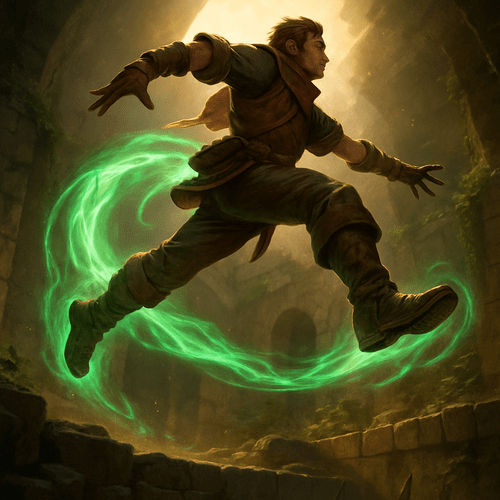
Jump: The Unsung Hero of the Spellbook
When I first rolled a Jump spell at a table, my players laughed and shook their heads. “What good does that do?” they asked. I answered them with a grin, “Hold your breath, lads. This little spell is a vault for greatness.”
A few nights later, we found ourselves perched on the edge of a 15‑foot cliff overlooking a chasm as wide as a river. The enemy’s archers were firing from the other side, and the only way to reach the high ledge where the treasure sat was to leap across. I whispered Jump into the wind, rolled the dice, and watched the party soar like a flock of startled hawks. That moment cemented my belief: Jump is one of the most underrated spells in Dungeons & Dragons.
The Mechanics That Make It Shine
“A jump can be as useful as a fireball, if you know how to wield it.” – A seasoned ranger, after saving his party from a pit trap.
The spell is simple: range 30 feet (or 60 feet with a higher level slot), duration 1 minute, and it grants the target an extra 10 feet of vertical or horizontal distance on each jump. The Jump effect stacks if you have multiple instances—though that rarely happens in practice.
Why the Math Works for You
- Base Jump Distance: 30 ft + (level × 10 ft). At level 5, that’s a solid 80‑foot leap.
- High Ground Advantage: When you’re on higher ground, the extra 10 feet means you can reach platforms that would otherwise be out of reach.
- No Attacks of Opportunity: The spell doesn’t give you an attack; it grants movement. That means you can dodge, reposition, and keep the fight fluid.
In a game where reach is king, this extra yard can mean the difference between being a target and becoming a threat.
Comparing to Other Options
Longstrider vs. Jump
- Longstrider gives +10 ft to speed for 1 hour. It’s great for races with low base speed, but it doesn’t let you cross gaps or climb high ledges.
- Jump, on the other hand, lets you literally cross those gaps. In a dungeon with uneven terrain, Jump is more versatile.
Fly vs. Jump
Flying grants vertical movement of up to 60 ft per round (at level 5). However, it requires concentration and can be interrupted. Jump doesn’t require concentration; you cast once and it lasts an entire minute—perfect for quick escape routes.
Catapult / Boulders
A rogue or bard might prefer the classic catapult trick: throw a boulder over a wall. That’s fun, but the target must be within 120 ft. Jump is more reliable when you’re dealing with enemies at 30–60 ft.
Community Voices and Balance Debates
The Reddit thread that sparked this post saw 703 upvotes and a 92% ratio—clear evidence that players are hungry for a deeper discussion. The comments reveal several themes:
- “Jump is underused because people think it’s just a gimmick.”
- “I use it to escape when the battlefield is cluttered.”
- “It’s a good counter to ranged attacks.”
The consensus? Balance is fine. It isn’t overpowered, but when used creatively it can tilt encounters.
Creative Uses Beyond the Textbook
1. Escape from Traps
A party trapped in a room full of spikes can Jump out before the trap activates. The extra distance lets them leap onto a platform or even onto the ceiling to avoid damage.
2. Tactical Positioning
During a skirmish, a wizard might cast Jump on a friendly fighter who then leaps over an enemy’s line of sight, gaining advantage on the next attack.
3. Environmental Interaction
In a forest with low branches, casting Jump allows a druid to hop from one branch to another, creating a vertical battlefield that forces enemies to adapt.
4. Disabling Siege Equipment
A rogue can Jump onto the wheel of a siege engine, knock it over, and cause chaos—no need for a heavy attack roll.
Synergies With Other Abilities
| Feature | How It Works with Jump | Example |
|---|---|---|
| Haste | Grants +10 ft speed and an extra action. Combined, you can Jump, move again, and attack—an unstoppable combo. | A paladin on Haste leaps over a pit, lands in melee range, then uses the bonus action to attack. |
| War Caster | Allows concentration checks while moving. Since Jump doesn’t require concentration, you can maintain other spells while leaping. | A warlock casts Eldritch Blast, jumps over a guard, and keeps the spell active. |
| Ranged Weapon Mastery | Lets you hit hard from a distance. After jumping, you can land in range of your favorite bow or crossbow. | An archer leaps onto a ledge to shoot at enemies below. |
Why This Resonates With Players
- Immediate Impact: A single roll and the party is repositioned.
- Low Risk, High Reward: No concentration needed; if you miss the jump, you’re still safe.
- Flexibility: Works for every class—rangers, fighters, wizards, even bards.
- Narrative Flair: The image of a party leaping over chasms adds cinematic flair to any session.
Quick Tips (for the impatient)
- Cast Jump before moving; it’s most effective when you have something to leap onto.
- Combine with high ground for maximum reach—an elevated platform can double your distance.
- Use Jump as a defensive tool: leap away from an area of effect spell.
- Remember the duration: 1 minute means you can keep it active through several rounds.
Common Mistakes I’ve Seen at the Table
- Assuming Jump is only for vertical movement: It’s just as useful horizontally—think about leaping over pits or enemy lines.
- Casting on the wrong target: Don’t waste it on a party member who can’t benefit from extra distance (e.g., a heavily armored tank).
- Ignoring terrain: A flat surface is a better launchpad than a slippery one. Choose your target carefully.
From Behind the Screen: A DM’s Perspective
“I love to give my players the feeling that the world responds to their ingenuity.” – DM, after letting a party use Jump to scale a tower during a siege.
When I see a group using Jump creatively, I feel like I’m witnessing a new way to tell a story. It’s not just about the spell; it’s about how they think around it. That’s what keeps sessions exciting.
Mini Encounter: The Cliffside Bazaar
Setup: A bustling market sits on a ledge overlooking a canyon. Enemies are perched on the opposite side, ready to rain arrows.
Goal: Reach the market and retrieve the Gem of Echoes before the enemies ambush.
- Step 1: The ranger casts Jump, leaps over the chasm onto the market stall.
- Step 2: The wizard, with a Haste spell active, uses his extra action to cast Fireball at the enemy archers.
- Step 3: The fighter lands on a stack of crates, gains advantage on the next attack.
Outcome: The party secures the gem and escapes—no one gets hurt.
Feel free to drop this scenario into your next session; it’s a perfect showcase for Jump’s versatility.
Final Word from the DM’s Corner
I’ve seen countless tables overlook the humble Jump. It’s time they didn’t. Think of it as a tool in your arsenal that can turn the tide with a single, well‑timed roll. Keep an eye out for opportunities—whether you’re crossing a ravine or leaping over an enemy’s line of sight.
Till next time, watch your torches and check for traps.
“The world is a big place; sometimes you just need a good jump to get where you want.” – A grizzled adventurer who never misses a chance to brag about his last leap.
Question for You: What’s the most creative way your party has used Jump, or what would you like to try next time?
Enjoying the Vault? Support the adventure.
Join our community of DMs on Patreon and help keep the tools free, updated, and growing. Every tier makes a difference.
Cancel anytime. No pressure — just gratitude.