
 Login
Login Create Account
 Forgot your password?
 Builders
 D&D 5e Character Builder
 D&D 5e Character Builder for newbies
 D&D 5e Spells
 D&D 5e Monsters
 D&D 5e Items
 Generators
 D&D 5e City Generator
 D&D 5e NPC Generator
 D&D 5e Name Generator
 D&D 5e Rumor Generator
 D&D 5e Wanted Poster
 Dungeon Master Resources
 Ultimate list of DM Screens
 Ultimate DM Generators, Maps, and World building resources for D&D 5e
 Ultimate list of Virtual Table Tops (VTTs) for D&D
 Help
Help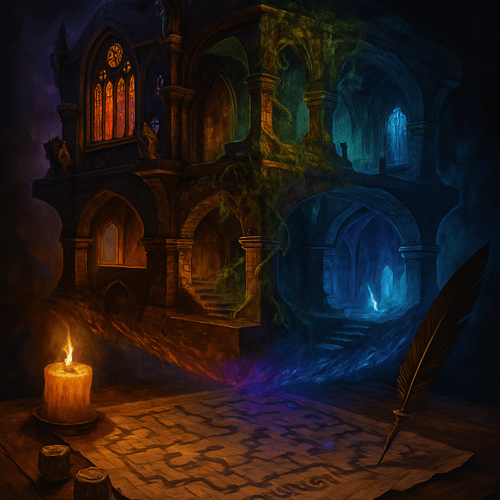
One Dungeon, Many Stories: A Veteran DM’s Take on Reskinning
I’ve sat at this table for thirty‑some odd years and I’ve seen the rise of the “prepped‑once‑play‑many” mindset. The old‑school way was to carve a new adventure out of fresh rock each time. But that grind can be exhausting, especially when you’re on a tight schedule. The question is: Is it lazy? Let me tell you why a single dungeon—if handled with care—can become a living, breathing canvas for your players.
A Quick‑Start Tale From the Frontlines
Picture this: You’re in a cramped tavern, rain pelting the windows. The party has just decided whether to chase the goblin trail or investigate the abandoned mine. Your clock is ticking; you’ve only got fifteen minutes before the next session. In the corner of your mind, an idea flashes—one dungeon, two skins. You pull out a map, shuffle in some new flavor text, and let the adventure unfold.
The night ends with laughter, a slammed door, and a promise that tomorrow’s quest will feel fresh even though it was built on the same bones. That’s the magic of reskinning, my friends. I steal from every where and make it mine.
The Anatomy of a Versatile Dungeon
A good base structure has three layers:
- Core layout – corridors, rooms, and a central hub that can host any narrative hook.
- Modular encounters – NPCs, traps, puzzles that can be swapped or re‑contextualized.
- Narrative hooks – themes that tie the dungeon to player choices.
When you prep one dungeon with these layers in mind, you’re not building a single story; you’re building an infrastructure for countless tales. The key is to keep the core flexible enough that each skin feels distinct.
Core Layout: Keep It Neutral
Avoid hard‑coded lore or character names in the layout. Think of the dungeon as a blank slate—walls, doors, and secret passages. Let your players decide what’s behind them.
- Neutral room names (e.g., The Hall, The Vault) instead of Grimlord’s Lair.
- Reversible architecture – corridors that can lead to a dragon lair or an ancient library with the same floor plan.
Modular Encounters: The “Swap‑It” Toolkit
Create encounter modules that you can drop into any room. A goblin ambush, a cursed puzzle, or a wandering lich—each can be flavored differently depending on the skin.
- Encounter A – Goblin patrols; flavor as bandit scouts in one skin, forest sprites in another.
- Encounter B – Ancient lock; mechanics stay the same but lore changes from dragon’s treasure chest to forgotten wizard’s archive.
- Encounter C – Trap door; effect unchanged but description varies: a crumbling floor vs. an enchanted portal.
Narrative Hooks: Tie It All Together
The skin is the story you tell around the core. Here are some ways to do it:
- Player choice drives flavor – If they follow the goblin trail, the dungeon becomes a bandit stronghold. If they head to the mine, it turns into a ruined dwarven mine.
- Randomized elements – Roll a die to decide whether the dungeon is haunted or besieged. This keeps players guessing.
- Lore layers – Add a backstory that can be revealed gradually; each skin adds a new piece of history.
A Mini‑Encounter You Can Drop In Now
The Party steps into the dimly lit corridor, the smell of damp stone mingling with something sweet. Ahead lies a door marked with an unfamiliar sigil.
- If the party is chasing goblins – The sigil is a bandit’s mark. Inside: a hoard of stolen goods and a wounded goblin leader.
- If the party is investigating the mine – The sigil is a dwarven rune. Inside: a cavern with glowing crystals and a trapped dwarven spirit.
You can keep the mechanics identical—rolling for perception, dealing damage, etc.—but the flavor text and NPC reactions change. That’s the power of reskinning.
Common Mistakes I’ve Seen at the Table
- Over‑flavoring – Adding too many unique details makes the dungeon feel contrived; keep it simple.
- Forcing choices – Players should feel that their decisions genuinely alter the story, not just change names on a map.
- Neglecting mechanics – Remember to adjust encounter difficulty when you swap NPCs; a dragon is not a goblin.
From Behind the Screen: A DM’s Perspective
I’ve seen players sigh in relief when the dungeon feels fresh even though it was built on the same bones. The real skill is turning repetition into variation.
When I’m pressed for time, I lean on the modular approach. It keeps my prep light and my sessions heavy with choice and I go with my gut.
Quick Tips Summary
- Keep core layout neutral.
- Build interchangeable encounter modules.
- Let player choices drive narrative flavor.
- Test each skin for balance before play.
- Keep mechanics consistent; only flavor changes.
Final Word From Behind the Screen
Reskinning isn’t laziness; it’s a way to honor the players’ agency while keeping your prep manageable. Treat each skin as a chapter in a larger saga. When the players finish one adventure, they’ll feel like they’ve just turned the page on a brand new story.
Until next time, watch your torches and check for traps and reuse those old maps.
A Dry Joke to End With
Why did the DM refuse to let the goblins use a spell‑casting table? Because they were trapped in the dungeon! (Fireball?)
“A good DM never runs out of tricks. He just keeps re‑using them with new names.” – A grizzled old adventurer, somewhere between the tavern and the next quest.
Do you have a favorite dungeon that you’ve reshaped for different campaigns? Me? I use plenty!
Enjoying the Vault? Support the adventure.
Join our community of DMs on Patreon and help keep the tools free, updated, and growing. Every tier makes a difference.
Cancel anytime. No pressure — just gratitude.