
 Login
Login Create Account
 Forgot your password?
 Builders
 D&D 5e Character Builder
 D&D 5e Character Builder for newbies
 D&D 5e Spells
 D&D 5e Monsters
 D&D 5e Items
 Generators
 D&D 5e City Generator
 D&D 5e NPC Generator
 D&D 5e Name Generator
 D&D 5e Rumor Generator
 D&D 5e Wanted Poster
 Dungeon Master Resources
 Ultimate list of DM Screens
 Ultimate DM Generators, Maps, and World building resources for D&D 5e
 Ultimate list of Virtual Table Tops (VTTs) for D&D
 Help
Help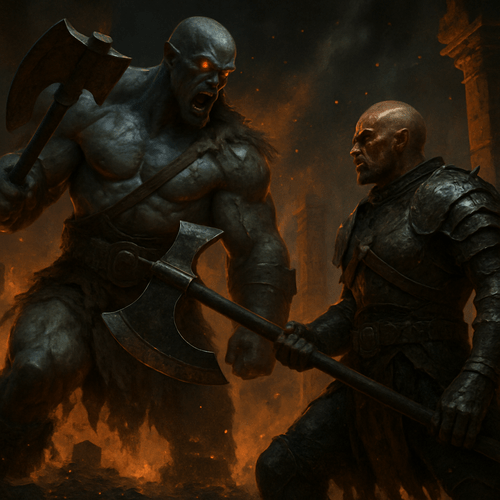
A Goliath’s Reckoning: How to Make a One‑v‑One Worthy of Legend
“I’ve stared down the maw of battle more times than I can count, and none of ’em ever felt quite right. Until now.” – Old sage, grizzled DM
The Tale Begins (and ends) with a Stubborn Warrior
Picture this: a thunderclap cracks the sky as a massive Goliath staggers into a valley carved by ancient war. He’s scarred from every fight he has ever fought, his axe dripping with the blood of foes and friends alike. He grunts, “I will take back what I was stripped of.”
The table shudders—he’s ready for a duel that feels like destiny and expects one.
You’re the DM. Your job isn’t just to hand him a foe; it’s to give him a challenge that tests his heart, his gear, and the very marrow of his spirit. If he rolls too many 20s, if every swing lands, you’ll have a tragedy in your hands: an overpowered hero who never learns humility.
What Makes a Duel Worth the Blood?
- Narrative Stakes – The enemy must embody what the Goliath is fighting for: honor, vengeance, or redemption. A simple goblin with a sword isn’t enough.
- Mechanical Parity – The opponent should match his level and gear on paper, but let room for clever tactics.
- The Element of Surprise – Even a well‑balanced foe can be terrifying if it behaves unpredictably.
- Opportunity for Growth – The battle should leave the Goliath with a lesson or a new path to follow.
Crafting the Perfect Counter
Class‑Based NPC, Not Monster
Monsters are great, but they’re not built for PvP. An NPC who has the same class and feats as your player can create tension without being overpowered.
- Build a Goliath Berserker (or simlar) – Use the same racial traits, hit points, and rage bonuses.
- Mirror the Gear – Give him an equivalent weapon, shield (if he uses one), and any magical items that are thematically appropriate.
- Add a Twist – Perhaps his axe is cursed, or he has a secret weakness revealed only in combat. He was exclied years before.
Legendary Resistance & Other Buffs
If you’re worried about the fight being too easy, sprinkle in legendary resistance or temporary hit points to keep him on his toes.
- Legendary Actions – Allow him to act after your turn or use a bonus action for a devastating attack.
- Cursed Items – The Goliath’s gear might be blessed, but the opponent’s could be cursed, forcing him to choose between power and safety.
Environmental Hazards
A battlefield isn’t just a flat plane. Throw in elements that force the player to think.
- Crumbling Rocks – Every hit on a certain spot causes the ground to shift.
- Blood‑Red Fog – Blinds the Goliath unless he uses his action to clear it.
- Lighting – Strikes randomly. To close, it hits either of them, can be used for balance if one is ahead too much in health or behind.
A Foe with Purpose
Choose an enemy that isn’t just another opponent but a story in itself. This Goliath has been around for a few years to get to this power. He has enemies.
- The Fallen Champion – Once the Goliath’s rival, now corrupted by a dark power. The duel is both revenge and redemption.
- A Tribal Warlord – A member of his own people who claims he stole the honor from the tribe.
- A brother, sister or family – of someone he has slan.
Sample Encounter: “Kharak, the Blood‑Scarred Warlord”
“You think you can claim my blood? I will crush your pride as easily as a twig for killing my father.”
- Race – Goliath
- Class – Barbarian (Berserker)
- Level – 8
- Hit Dice – 1d12 + 4 per level
- Key Stats – Strength 20, Constitution 18, Dexterity 14
- Equipment – Two‑handed greataxe with a jagged blade (magical bonus +2), heavy armor of stone, and a cursed amulet that grants temporary hit points but drains vitality each round.
- Special Abilities
- Rage (as per level 8) with an extra attack
- Blood‑Bond – When his HP drops below 30%, he can use an action to regain 10 HP but must make a DC 15 Constitution saving throw or suffer 5 bleed damage.
- Legendary Resistance (3) – Can succeed on any saving throw that would otherwise fail.
How It Plays Out
- Round 1: Kharak attacks with a devastating cleave. The Goliath is forced to dodge, using his action to block a hit with a shield.
- Round 2: The ground beneath the Goliath cracks; he must succeed on a DC 12 Dexterity check or fall prone, giving Kharak an advantage.
- Round 3: Kharak’s cursed amulet activates. He regains HP but the Goliath takes bleed damage, forcing him to decide whether to keep fighting or retreat.
Common Mistakes I’ve Seen at the Table
- Giving the player a monster that can one‑shot them. Don’t do this. Make it hard, but not impossible.
- Forgetting that equipment matters. A magic sword is not the same as a mundane greatsword.
- Ignoring the narrative. Mechanics without story are just numbers on paper.
Quick Tips for Your Next Session
- Match gear, not just level. If your player has a +3 greataxe, give your NPC something comparable.
- Add an environmental twist. A storm or shifting terrain keeps things interesting.
- Use legendary actions sparingly. They should feel like a final act, not a constant threat.
Dry D&D Joke
Why did the Goliath refuse to play chess? Because he couldn’t stand the idea of a king being checked without a rook in his corner!
“A good DM remembers that a battle is only as good as the story it tells.” – Old sage, from behind the screen
The Final Word
You’re not just throwing numbers at a player; you’re writing a chapter of their saga. Give them an opponent who respects their strength, challenges their pride, and leaves them with a memory that will echo around future tables.
Till next time, watch your torches, check for traps and good balance.
Enjoying the Vault? Support the adventure.
Join our community of DMs on Patreon and help keep the tools free, updated, and growing. Every tier makes a difference.
Cancel anytime. No pressure — just gratitude.