
 Login
Login Create Account
 Forgot your password?
 Builders
 D&D 5e Character Builder
 D&D 5e Character Builder for newbies
 D&D 5e Spells
 D&D 5e Monsters
 D&D 5e Items
 Generators
 D&D 5e City Generator
 D&D 5e NPC Generator
 D&D 5e Name Generator
 D&D 5e Rumor Generator
 D&D 5e Wanted Poster
 Dungeon Master Resources
 Ultimate list of DM Screens
 Ultimate DM Generators, Maps, and World building resources for D&D 5e
 Ultimate list of Virtual Table Tops (VTTs) for D&D
 Help
Help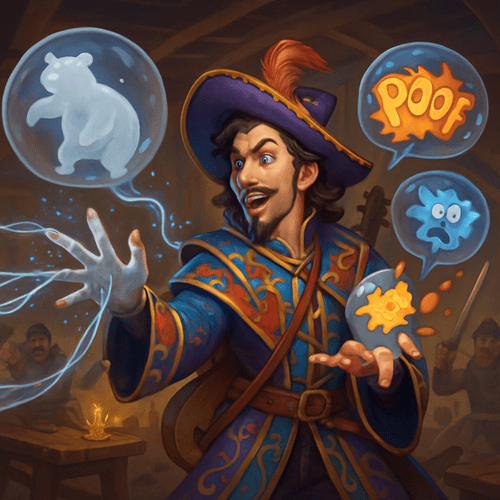
Ridiculous ‘Spells’ to Cast When Using Silvery Barbs
A Night of Unfinished Songs and Broken Expectations
It was the kind of night that a bard would write a ballad about if he had any patience left. The moon hung low over the ruined keep, casting long shadows across the cracked stone floor. I stood at the center of the courtyard, voice raised in an attempt to soothe the ragged band of goblins who had taken refuge behind the broken archway. Their eyes flickered with greed and fear as they eyed our camp. My hands trembled—not from cold, but from anticipation.
I whispered, “A quick rhyme for the night…” and then let the words slip into something… absurd. The goblins froze mid‑step, their snarls turning into a stunned silence that felt like a second of time stretched into eternity. That was the moment I realized Silvery Barbs could be more than a tactical snare; it could be a stage for theatrics.
What Is Silvery Barbs, Anyway?
Silvery Barbs is a spell‑like ability that lets you charm a creature and then use its confusion to benefit an ally. The wording reads: You magically distract the triggering creature and turn its momentary uncertainty into encouragement for another creature. In plain terms:
- You target an enemy who takes damage.
- They must succeed on a Wisdom saving throw or become charmed by you.
- While charmed, they can grant advantage to an ally’s attack roll, saving throw, or ability check.
It is the bard’s version of a hold person with a twist. The charm effect lasts only until the end of your next turn, but that brief window can swing a battle if you know how to exploit it.
Why Ridiculous Spells Work So Well
The power of Silvery Barbs comes from two places:
- Psychology – A creature’s reaction to an odd or shocking utterance is often to freeze, laugh, or even flee. The DM can use this to create a moment of comic relief or tension.
- Mechanics – The charm effect grants advantage to an ally. If you time it right, that advantage can be the difference between life and death.
When a bard mutters something wildly outlandish, the enemy’s mind is thrown off‑balance. That is precisely what Silvery Barbs intends: a momentary distraction that gives you and your party a tactical edge.
Crafting Ridiculous Spells: A Rule‑Friendly Approach
You don’t need to invent brand‑new spells or break the rules. The trick is to use existing spell names, concepts, or even plain nonsensical phrases that feel like they belong in a high‑fantasy setting. Here are some guidelines:
- Keep it believable – Even if you’re making up a silly effect, the phrase should sound like something an eccentric wizard might say.
- Avoid overpowered references – Power Word Kill is out of reach for a level 3 bard, but referencing it can still be funny without actually using it.
- Tie it to game mechanics – Mentioning a spell that exists in the PHB (even if you’re not casting it) adds weight and recognizability.
Below are some examples that have worked well for me:
- Summon invisible ketamine bear
- Control sphincter
- Invert kneecaps
- Animate teeth
- Summon internal bees
- Induce manual breathing
- Caramelize gallbladder
- Greater megacolon
Feel free to adapt or expand on these. The key is the reaction they provoke.
Creative Uses That Go Beyond the Laughter
Distraction in a Tight Combat
Imagine you’re surrounded by a horde of marauding orcs. You have a rogue with a sneak attack ready, but your party needs to stay alive long enough for them to finish off the main threat. You cast Silvery Barbs and mutter “Summon internal bees!” The nearest orc stumbles back, eyes widening as if he’s suddenly been warned of an invisible swarm. While he’s still reeling, the rogue slips in, takes advantage of his momentary confusion, and lands a critical hit.
A Moment to Reset Tension
After a long siege, your party is on edge. You’re about to take a rest but the DM wants to keep the stakes high. You cast Silvery Barbs, whisper “Power word kill!” The goblin leader’s face turns ashen. Suddenly everyone feels the weight of that absurd threat and decides to press on.
Turning Enemies into Allies for a Moment
You’re facing a powerful lich who is immune to charm. You still want to use Silvery Barbs, so you say “Animate teeth!” The lich pauses, perhaps because it thinks your words have some hidden meaning. Even if the charm fails, the pause can give your party a chance to regroup.
Common Mistakes I’ve Seen at the Table
- Using Silvery Barbs as a gimmick – When players use it only for jokes without tying it into combat strategy, the effect feels wasted.
- Ignoring the saving throw – Some DMs treat the charm as automatic. The Wisdom save is crucial; over‑using it can make fights feel unfairly easy.
- Over‑exaggerating the effect – Saying “Power word kill” and then letting a level 3 bard actually try to cast it can break immersion. Keep the absurdity in speech, not in action.
From Behind the Screen: Why I Love This Tool
When I first ran Silvery Barbs, I was skeptical about its impact. The moment I saw my players laugh and then win a fight because of a well‑timed charm, I realized that humor can be a serious tactical asset. It forces us to think on our feet and rewards creative role‑playing.
I’ve found that the best moments come when the DM and the party share an inside joke about what the bard is “casting.” The shared absurdity becomes part of the story, not just a one‑off gag.
Quick Tips for Bards
- Plan ahead. Know your allies’ next moves before you whisper that ridiculous line.
- Use the environment. If you’re in a cavern with echoing walls, make your absurdity sound like it’s bouncing off stone.
- Mix up the level of absurdity. A low‑level party might get a laugh from “Summon invisible ketamine bear,” but a high‑level group could handle something more elaborate.
A Mini Encounter You Can Drop In
The Echoing Hallway – Your party enters a long, narrow corridor lined with statues. Each statue bears an inscription that reads “Speak your truth.” As you advance, the bard begins to recite absurd spells, and each time the statues’ eyes glow faintly.
- Trigger: When the bard casts Silvery Barbs.
- Effect: Statues give advantage on saving throws for the next turn.
- Optional Twist: If the bard uses a spell that truly exists (e.g., Dispel Magic), one statue explodes in a burst of glitter, dealing minor damage to all nearby enemies.
A Dry Joke to End With
“Why did the wizard refuse to play cards with the bard?”
Because every time the bard tried to deal a bluff, he ended up casting Summon invisible ketamine bear instead.
Till next time, keep your quills sharp and your spells… absurd. (wink)
Enjoying the Vault? Support the adventure.
Join our community of DMs on Patreon and help keep the tools free, updated, and growing. Every tier makes a difference.
Cancel anytime. No pressure — just gratitude.