
 Login
Login Create Account
 Forgot your password?
 Builders
 D&D 5e Character Builder
 D&D 5e Character Builder for newbies
 D&D 5e Spells
 D&D 5e Monsters
 D&D 5e Items
 Generators
 D&D 5e City Generator
 D&D 5e NPC Generator
 D&D 5e Name Generator
 D&D 5e Rumor Generator
 D&D 5e Wanted Poster
 Dungeon Master Resources
 Ultimate list of DM Screens
 Ultimate DM Generators, Maps, and World building resources for D&D 5e
 Ultimate list of Virtual Table Tops (VTTs) for D&D
 Help
Help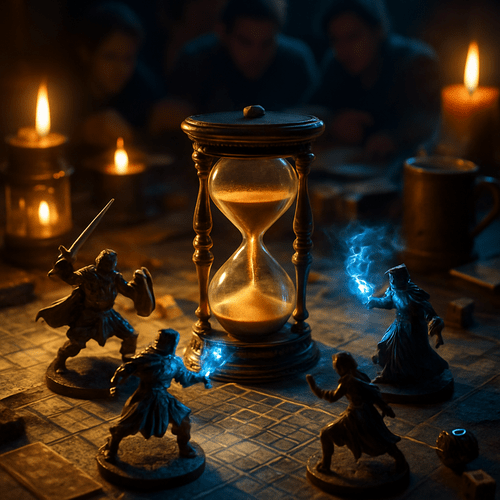
What a Timer Can Do For Your Table
I remember the first time I tried a timer in combat. It was a summer night, the moon hung low over the cracked stone of the abandoned watchtower, and my group—four half‑elves, a dwarf with a scar that ran from ear to cheek, and a human wizard who thought spellcasting meant waving a wand like a magician—were locked in a firefight against a swarm of gnolls. The room was small, the stakes high, and someone in the back whispered, “We need something to keep us moving.” I pulled out an old stopwatch from my pocket, set it for 60 seconds, and let the game begin.
“The clock is ticking,” I said, “and so are you.”
It was a gamble. Would the players respect the rhythm? Would I as the DM keep up? HA. The answer came in a flurry of action rolls, frantic descriptions, and one heroic moment when a rogue finally decided to throw a dagger at a gnoll that had just slipped through the door.
Why A Timer Matters In Modern Play
- Pacing: Traditional turn‑based combat can stretch on forever, especially in large parties. A timer forces decisions to be made faster, keeping momentum alive.
- Player Agency: When you give a player a set amount of thinking time, you’re acknowledging that the real challenge is deciding what to do, not how to roll dice.
- Fairness: Some players naturally take longer. A timer levels the playing field and prevents a single voice from dominating the table.
- Narrative Flow: Quick decisions lead to quick consequences—spells are cast, enemies react, and the story keeps moving.
The Mechanics of a Timer
- Set a Time Limit for Decision‑Making – 60 seconds is common, but you can adjust based on party size or complexity.
- Free Description Time – After deciding, a player may narrate their action, roll dice, and ask questions about the environment without losing time.
- Default Action – If no decision is made within the limit, the character automatically takes Dodge (or another sane default like Ready if you prefer). This keeps the table moving even when a player stalls.
- Reset After Each Turn – The timer starts anew for every participant.
What About Rules Lawyering?
- Remember Abilities: A timer does not replace knowledge of your character’s class features. Players still need to know their spell slots, attack bonuses, and special abilities.
- Keep It Light: Use the timer as a tool, not a punishment. If someone consistently fails to decide in time, talk with them outside the session.
In‑Game Example: The Tower of Whispering Shadows
“The tower groans as the wind howls through its broken windows.”
You find yourself in a tall, candlelit chamber where a group of 12 goblins have set up a makeshift camp. The DM announces a combat start and pulls out the stopwatch.
- Goblin Leader – “I’ll roll first!” The timer starts.
- Player 1 (Half‑Elf Ranger) – “I’m going to shoot at the leader’s back with my longbow.” She speaks, rolls a d20, and the action is resolved in 3 seconds. Restart the timer for the next player.
- Player 2 (Dwarf Fighter) – He thinks, then decides: “I’ll charge the nearest goblin with my greataxe.” He rolls, and the fight continues. Once again, restart the timer for the next player…
If Player 3 (Human Wizard) hesitates for more than 60 seconds, she automatically casts a spell of her choice—perhaps a Mage Hand to pick up a dagger. The table keeps turning; no one stalls for a minute.
Common Mistakes I’ve Seen at the Table
- Using the Timer as a Penalty – Some DMs treat missed turns as punishment, which can kill player enthusiasm.
- Ignoring Player Input – Forcing a Dodge without offering an alternative keeps players disengaged.
- Over‑complicating Rules – A timer should simplify combat, not add another layer of bookkeeping. If there is a debate, pause the timer.
Quick Tips for DMs
- Start with 60 seconds if your group is new to timers; reduce as they get comfortable.
- Keep the stopwatch visible so everyone can see it—transparency builds trust.
- Encourage players to prepare their actions mentally before their timer starts.
- Use a “soft reset” after each round: give a moment for the DM to narrate and for players to regroup.
From Behind The Screen
“I’ve seen a lot of tables, and I’ve learned that people love structure. A timer is just a gentle leash.”
The goal isn’t to force everyone into a sprint; it’s to give the table a rhythm that keeps the story alive. Think of the timer as a metronome—players can play their own tune, but they all stay in sync.
Gritty Plot Hook for Your Next Session
Your party is hunting a cult that worships a clock‑ticking demon. Every encounter with its minions must be resolved within a strict time limit, or the demon’s power grows. The stakes are literal: every missed decision fuels the clock’s ticking.
Final Word
A timer isn’t a gimmick; it’s a tool that can turn a sluggish skirmish into an adrenaline‑filled dance of decisions. It rewards quick thinking, encourages players to know their characters, and keeps the narrative breathing. If you’re willing to experiment—and if your group is ready for a bit of structure—give it a try. You’ll find that the clock becomes less of a threat and more of a companion.
“Time’s up,” I say as the final second hits zero, “and the story goes on… with fireball!”
Till next time, watch your watches, torches and check for traps.
Enjoying the Vault? Support the adventure.
Join our community of DMs on Patreon and help keep the tools free, updated, and growing. Every tier makes a difference.
Cancel anytime. No pressure — just gratitude.