
 Login
Login Create Account
 Forgot your password?
 Builders
 D&D 5e Character Builder
 D&D 5e Character Builder for newbies
 D&D 5e Spells
 D&D 5e Monsters
 D&D 5e Items
 Generators
 D&D 5e City Generator
 D&D 5e NPC Generator
 D&D 5e Name Generator
 D&D 5e Rumor Generator
 D&D 5e Wanted Poster
 Dungeon Master Resources
 Ultimate list of DM Screens
 Ultimate DM Generators, Maps, and World building resources for D&D 5e
 Ultimate list of Virtual Table Tops (VTTs) for D&D
 Help
Help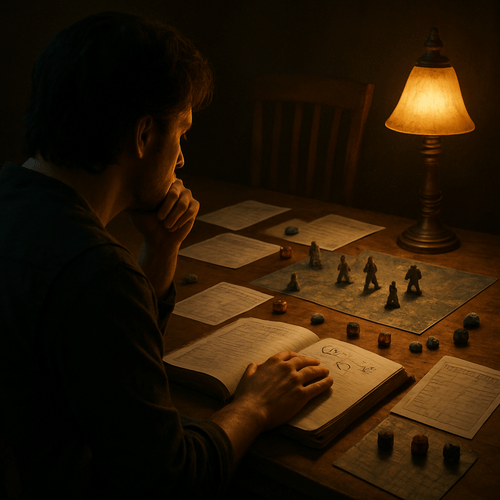
When the Dice Roll Fails: A DM’s Guide to Cutting a Friend from the Table
A Rough Night in the Tunnels of Evernight
In the third session of our long‑running campaign, I watched my veteran party—three fighters, a rogue, and a wizard—squint at the map. The goblin ambush was unfolding, dice clacked, spells fizzed. Then the monk, with his fists glowing like coals, shouted “Let’s take this one!” The room fell silent. I knew immediately that something was off. He had been the only player who could turn a simple skirmish into a spreadsheet of damage calculations and loot distribution. But tonight, he had pulled a card from his pocket that read “I’m not playing.” That was the last straw.
The Anatomy of an Unruly Player
- Self‑centered play: Prioritizing personal glory over group goals.
- Cheating or sloppy bookkeeping: Over‑using resources, ignoring hit‑point tracks.
- Disrespect toward roleplay: Shouting over NPC dialogue, refusing to act in character.
- Escalating frustration: Turning a lost battle into an emotional outburst.
When you see these traits stacked together, you’re looking at a player who has slipped from a “good companion” to a “disruptive force.”
Why the Friendship Line is Blurry
It’s easy to chalk this up to “different playstyles,” but that excuse only works when both parties are willing to adapt. In my case, I had tried:
- Home‑brewing item restrictions so he couldn’t hoard everything.
- Conversations about mechanics—yet the monk kept ignoring hit‑point logs.
- Group‑wide compromises like limiting loot to role‑playful characters.
Each time, the result was a temporary lull followed by a return to the old pattern. The friendship line blurred because friendship is not a shield against bad table etiquette.
Lessons From a Veteran DM’s Playbook
1. Set Clear Expectations Before the Game Begins
“When I say we’re playing for story, that means every character’s actions affect the plot.”
Write them down in the campaign notes and remind players at the start of each session.
2. Keep the Rules Light, but the Consequences Heavy
- Track resources: Use a shared sheet or a dedicated app so no one can claim “I didn’t know I had X spell slots.”
- Enforce penalties for cheating: If someone uses a feature out of turn, roll a 1d20. On a 1–5, they lose a point of initiative.
3. Offer Structured Role‑Play Opportunities
- Mini‑quests that require the monk to make a decision affecting the party.
- Dialogue prompts during combat that compel him to act as his character would.
If he still refuses, consider giving him a “choice”: either play the role or step away for the session.
4. When All Else Fails, Cut the Link Respectfully
- Plan the conversation outside of game time.
- Be honest but gentle: “I love having you in the group, but the table isn’t working for us.”
- Offer alternatives: “Maybe you’d enjoy a different campaign or solo adventures.”
Doing this preserves the friendship while keeping the game healthy.
A Mini Encounter to Try Out
Scenario: The party discovers a cursed relic that grants immense power but drains life. The monk must decide whether to use it, risking his own vitality for the group’s benefit.
| Decision | Consequence |
|---|---|
| Use it | +5 damage next round, lose 1d8 HP permanently |
| Refuse | Party gains a temporary buff, but no extra damage |
Let the monk’s choice ripple through the story—no loophole to cheat.
Common Mistakes I’ve Seen at the Table
- Assuming players will “just do the right thing.”
- Neglecting to set mechanical boundaries for loot and resources.
- Ignoring emotional triggers that lead to outbursts.
- Failing to communicate expectations before the session starts.
Avoid these by establishing a pre‑game ritual: quick recap, rule reminders, and a silent “I’m ready” signal.
Quick Tips Summary
- Write down role‑play rules in the campaign notes.
- Use shared sheets for resources to prevent cheating.
- Offer meaningful choices that impact the story.
- Have a respectful exit plan if a player becomes disruptive.
A Dry Joke to Lighten the Mood
Why did the DM bring a ladder to the table? Because the players were climbing the skill tree instead of following the plot!
“I’ve seen more dragons slain than I’ve seen friends drop.” – A grizzled DM, after the monk finally left the session.
Final Question to Ponder
When you’re about to pull a friend from the table, what is one rule you could enforce that would make them feel included while keeping the game on track?
Till next time, keep your dice balanced and your party focused.
Enjoying the Vault? Support the adventure.
Join our community of DMs on Patreon and help keep the tools free, updated, and growing. Every tier makes a difference.
Cancel anytime. No pressure — just gratitude.